Are Ordinary Cables Safe for Singapore Floating Solar Farms? (Why TUV Matters)
Beyond the Surface: Why TUV-Certified Cabling is the Silent Guardian of Your Floating Solar ROI
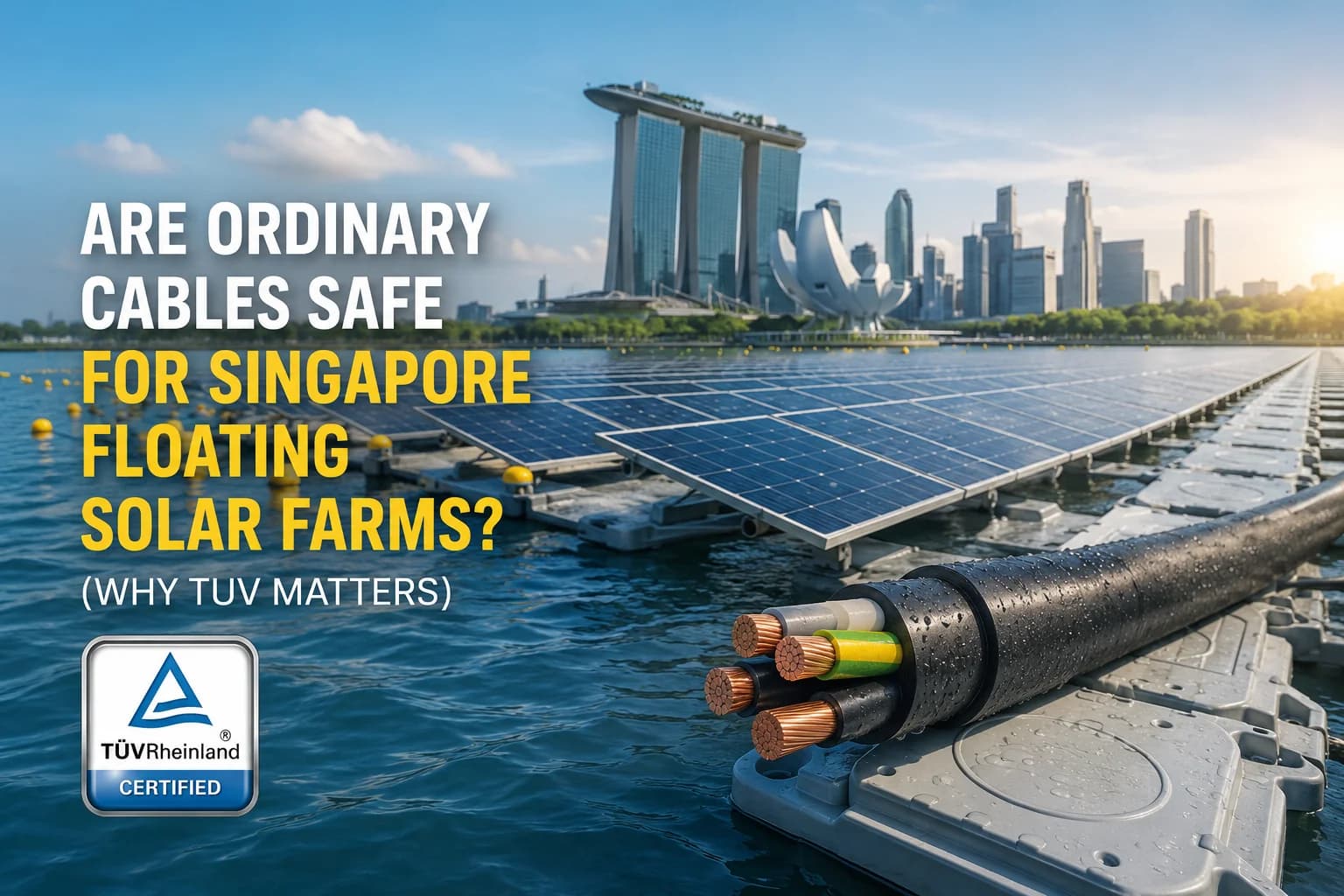
Floating solar failing? Learn why non-certified cables are a costly risk in Singapore’s extreme environment. Ensure your project's 25-year success.
As land scarcity continues to drive innovative renewable energy solutions, Singapore has emerged as a global pioneer in Floating Photovoltaic (FPV) systems. With massive projects like the 60 MWp Sembcorp Tengeh Floating Solar Farm leading the way, the city-state is proving that water bodies can be transformed into vital green power hubs. However, beneath the gleaming solar panels lies a critical infrastructure component that often determines the long-term viability of the entire multi-million-dollar project: the cabling system.
For Engineering, Procurement, and Construction (EPC) contractors and solar project developers, there is a constant balancing act between initial capital expenditure (CAPEX) and long-term operational expenditure (OPEX). In an attempt to control upfront costs, some might ask: Are ordinary outdoor cables safe enough for floating solar farms?
The answer is no way
In the extreme, unforgiving environment of an equatorial floating solar array, deploying standard, non-certified cables is a recipe for catastrophic system failure, severe safety hazards, and massive financial losses. To guarantee the expected 25-year lifespan of a solar project, utilizing TUV-certified PV cables is not just a recommendation—it is an absolute necessity.
In this comprehensive guide, we will explore the harsh realities of floating solar environments, decode why standard cables fail, uncover the rigorous science behind TUV certification, and share a recent strategic initiative by Zhejiang Hongce Cable Co., Ltd. that underscores our commitment to the Singaporean green energy market.
The Harsh Environment of FPV Systems in Singapore
Singapore’s unique geographical location places it right at the equator, creating a uniquely challenging operational environment for electrical equipment. When you move a solar farm from a rooftop or a dry field onto the surface of a reservoir or coastal water body, the environmental stressors multiply exponentially.
Constant Moisture and Submersion Risks
Unlike ground-mounted systems that deal with occasional rain, floating solar cables operate in an environment of 100% relative humidity. Furthermore, due to the natural movement of the floating pontoons and changing water levels, cables routed along the floating structures are frequently splashed, periodically immersed, or subjected to continuous pooling of water. Standard cable insulation is simply not designed to act as an impermeable moisture barrier over a period of two decades.
Extreme UV Radiation and Thermal Cycling
Equatorial sunlight is notoriously intense. Floating solar cables are exposed to unrelenting direct ultraviolet (UV) radiation day in and day out. Furthermore, the "albedo effect" (the reflection of sunlight off the water surface) means the cables are often blasted with UV rays from multiple angles. Additionally, the cables experience severe thermal cycling—baking in the intense afternoon sun and rapidly cooling during sudden tropical thunderstorms or at night.
Mechanical Stress from Wind and Wave Action
Water is never entirely still. Wind loads, water currents, and wave action cause continuous physical movement of the FPV structure. This translates into relentless mechanical stress, bending, and tension on the cables connecting the panels to the inverters. Standard electrical cables lack the robust flexibility and tensile strength required to endure thousands of hours of physical friction and bending without snapping or exposing the internal copper conductors.

Tropical FPV shares a lot with tropical building-wire environments — ambient temperature, UV exposure, humidity swing. Our Indonesia IEC cable selection guide walks through the ambient-temperature derating logic that also applies to Singapore-based floating installations.
Why "Ordinary" Cables Fail in Floating Solar Applications
When project managers attempt to substitute specialized PV cables with standard PVC (Polyvinyl Chloride) outdoor cables, the degradation process begins almost immediately. The failures are predictable, dangerous, and incredibly expensive to rectify.
The Threat of "Water Treeing" and Insulation Breakdown
One of the most insidious threats to ordinary cables in a wet environment is a phenomenon known as "water treeing." When standard polymer insulation is subjected to an electrical field in the presence of continuous moisture, microscopic, tree-like fractures begin to grow within the insulation material. Over time, these micro-fractures compromise the dielectric strength of the cable. Eventually, the water tree bridges the gap between the conductor and the external environment, leading to a sudden and dangerous insulation breakdown, short circuits, and potentially devastating electrical fires on the water.
UV Degradation of Standard Polymers
Standard PVC jackets, even those claiming to be "outdoor rated," contain plasticizers that make them flexible. Under Singapore's intense equatorial UV radiation, these polymer chains undergo photo-oxidation. The plasticizers leach out, leaving the cable jacket brittle, cracked, and chalky. Once the outer jacket cracks, water easily penetrates the core, leading to immediate system ground faults.
Galvanic Corrosion and Levelized Cost of Energy (LCOE) Impact
If moisture penetrates an ordinary cable, galvanic corrosion attacks the copper conductors. Corrosion dramatically increases the electrical resistance of the wire. Even if the cable doesn't fail completely, this increased resistance leads to "yield loss"—a significant portion of the generated solar power is lost as heat before it ever reaches the inverter. For an EPC contractor or investor, this direct hit to the project's energy yield permanently damages the Levelized Cost of Energy (LCOE) and the long-term Return on Investment (ROI).
Even a fully TÜV-certified jacket cannot compensate for under-purity copper in the conductor. The 99.95% oxygen-free copper verification methodology — DC resistance, OES, and spark testing — is the upstream check every FPV specification should carry before any downstream durability claim.
Decoding TUV Certification: The Gold Standard for PV Cables
To prevent these catastrophic failures, the international solar industry relies on rigorous testing and certification protocols. Among these, the TUV Rheinland certification (specifically aligning with standards like EN 50618 and IEC 62930) is universally recognized as the gold standard for photovoltaic cables.
Feature | ||
Standard Type | European Standard (CENELEC) | International Electrotechnical Commission (IEC) |
Primary Market | Europe & EU-funded projects | Global market (including ASEAN, Middle East) |
Typical Cable Type | H1Z2Z2-K | IEC 62930 PV Cable |
Key Characteristics | Mandatory LSZH (Low Smoke Zero Halogen) | Broader scope (Halogenated/LSZH optional) |
Rated Voltage | 1500V DC | 1500V DC |
But what exactly does a cable go through to earn the TUV stamp of approval?
The AD8 Water Resistance Requirement
For floating solar systems, standard waterproof ratings (like IP67) are not enough for cabling. Cables must meet the AD8 (Submersion) standard. This requires the cable to maintain its electrical integrity and insulation resistance even when permanently continuously submerged in water. TUV-certified PV cables designed for floating solar applications are engineered with specialized cross-linked polyethylene (XLPE) compounds that completely block water ingress at a molecular level.
The Damp-Heat Test (1000 Hours)
To simulate the aggressive tropical climate of Southeast Asia, TUV subjects cables to the grueling Damp-Heat Test. Cables are placed in an environmental chamber at 85°C (185°F) with an 85% relative humidity for a staggering 1,000 continuous hours. Standard cables melt, blister, or short-circuit under these conditions. A TUV-certified PV cable must emerge from this chamber with its mechanical and electrical properties completely intact.
Advanced Ozone and UV Resistance Testing
TUV certification demands that the outer sheath of the cable withstands highly concentrated ozone and intense UV light chambers without showing any microscopic signs of cracking or degradation. This guarantees that the cable can sit under the Singaporean sun for 25 years without its protective jacket failing.
The certification body methodology behind TÜV 2Pfg 1169 parallels the flame retardant / fire resistant testing frameworks — see our flame retardant vs fire resistant cable standards guide for a full breakdown of IEC 60332 and IEC 60331 test methodology using the same testing philosophy.
A Strategic Vision: Hongce Cables' Commitment to Singapore's Green Future
At Zhejiang Hongce Cable Co., Ltd., we do not just manufacture cables; we actively engage with the markets we serve to understand their deepest engineering challenges. Our commitment t
o the Southeast Asian renewable sector is not merely theoretical—it is driven by direct, on-the-ground experience and strategic leadership.
In late May of this year, the Chairman of Zhejiang Hongce Cable Co., Ltd. participated in a high-level delegation organized by the Zhejiang Taizhou Entrepreneurs Association. The destination was Singapore—the heart of Southeast Asia's green energy transition.
During this pivotal visit, our Chairman engaged in deep discussions with local Singaporean chambers of commerce, leading energy contractors, and industry stakeholders. The insights gained were profound. It became abundantly clear that Singapore is aggressively pushing the boundaries of green electricity generation, setting ambitious targets for solar deployment despite its limited landmass.
However, the local industry leaders also voiced a critical concern: the urgent need for a highly reliable, cost-effective, and deeply localized supply chain for solar infrastructure.
Realizing the massive potential and the strict demands of this market, our Chairman made a definitive strategic decision on the spot to accelerate Hongce Cables' internationalization. We recognized that while our existing TUV certifications prove our global quality, succeeding in Singapore requires total localized integration.
As a direct result of this May visit, Zhejiang Hongce Cable Co., Ltd. has officially initiated the process to adopt and seamlessly integrate Singapore’s specific local wire and cable entry standards and testing protocols on top of our existing TUV compliance. We are not just looking to export to Singapore; we are actively conforming to the highest localized standards of the EMA and Singaporean EPCs to become a trusted, long-term partner in the ASEAN energy market.
This firsthand experience ensures that when a Singaporean EPC purchases from Hongce, they are buying from a manufacturer that has walked their sites, spoken to their local chambers, and deeply understands the regulatory and environmental rigors of their specific location.
How Hongce Cables Secures Your Solar Investments
For project developers and EPCs operating in Singapore, Malaysia, Indonesia, and the broader ASEAN region, choosing Zhejiang Hongce Cable Co., Ltd. means eliminating risk.
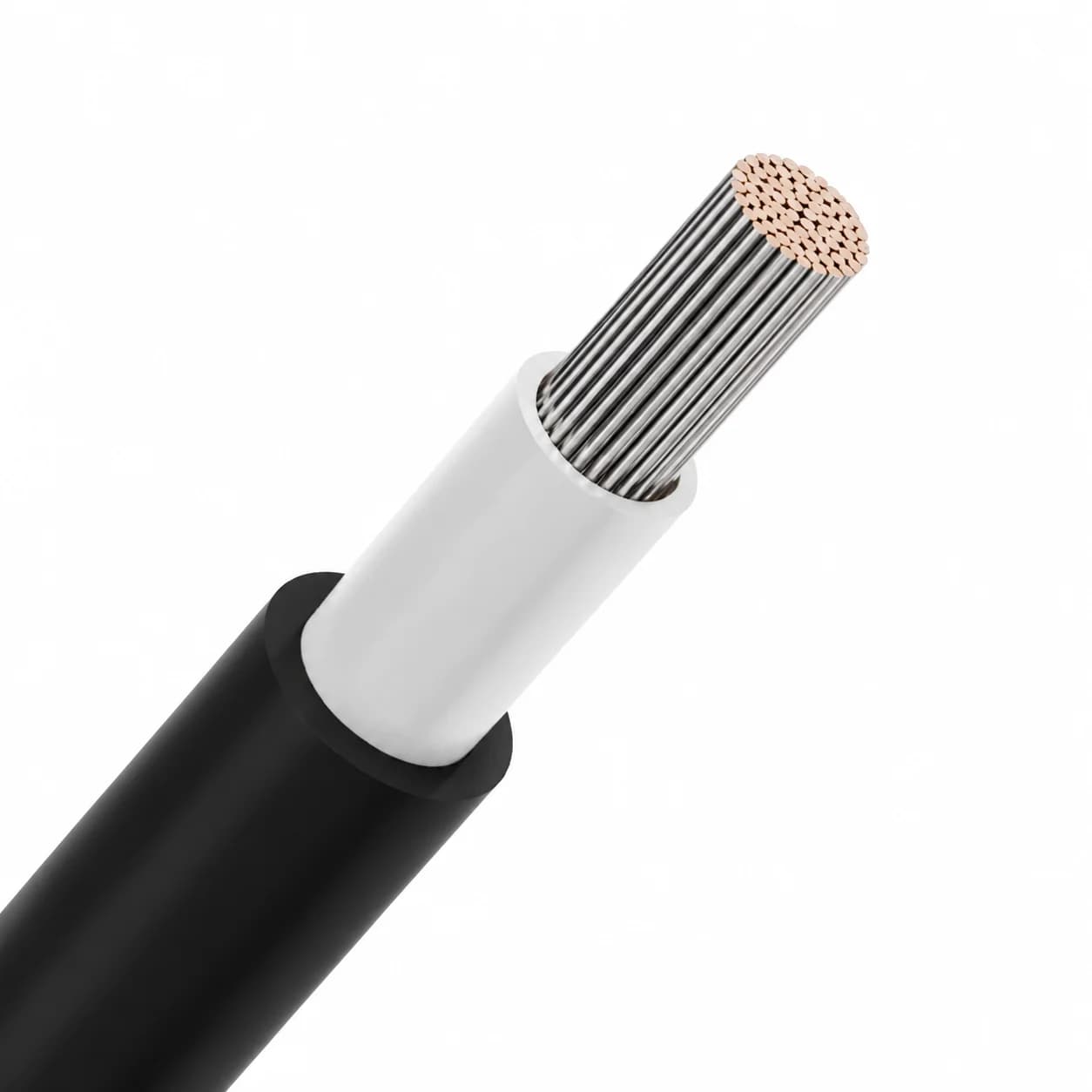
Premium XLPE Insulation: Our high-performance PV cables (such as H1Z2Z2-K and PV1-F models) utilize advanced Cross-Linked Polyethylene (XLPE) insulation. Through an electron-beam cross-linking process, the molecular structure of the polymer is locked into a 3D grid. This makes the insulation virtually impervious to water treeing, capable of withstanding extreme thermal loads up to 120°C, and highly resistant to the abrasive mechanical stress of FPV wave action.
Low Smoke Zero Halogen (LSZH) Safety: Safety goes beyond environmental durability. In the rare event of an external fire, ordinary PVC cables release toxic, corrosive halogen gases and thick black smoke. Hongce’s TUV-certified solar cables are formulated with LSZH materials, ensuring that no toxic fumes are emitted, protecting both maintenance personnel and the sensitive environmental ecology of Singapore's reservoirs.
Uncompromising QA/QC Manufacturing: As a leading Chinese cable manufacturer, our factory in Deqing, Zhejiang, operates under draconian Quality Assurance and Quality Control protocols. Every single spool of PV cable destined for the Southeast Asian market undergoes high-voltage spark testing, dielectric strength evaluations, and strict dimensional checks before it ever leaves our facility.
Are you an EPC contractor, procurement manager, or project developer planning a floating solar project in Singapore or the wider ASEAN region?
Do not leave your multi-million-dollar energy yields to chance. Partner with a manufacturer who understands your local challenges.
[Contact Zhejiang Hongce Cable Co., Ltd. today] for technical consultations, product spec sheets, and highly competitive quotes on our fully TUV-certified, FPV-ready solar cables. Let us power a greener future, together.
About the Author
Liangce Chi currently serves as Southeast Asia Market Analyst at Zhejiang Hongce Cable Co., Ltd. His work involves in-depth research covering power infrastructure construction across Southeast Asia, price trends of bulk commodities, and cross-border cable trade compliance. Combining insights from macroeconomic data with extensive hands-on cross-border trade experience, Liangce Chi goes beyond theoretical research and conducts on-site assessments of industrial manufacturing investment climates in Thailand, Vietnam, Indonesia and other Southeast Asian markets. Drawing on his professional work, he secured bulk orders from well-established Thai enterprises for Zhejiang Hongce Cable. This landmark achievement has laid a solid quantitative foundation for the company to further expand its market share of industrial building support cables in Thailand and the broader Southeast Asian region.