Trading Company vs. Direct Power Cable Manufacturers: Which is Better for Your Project?
Stop overpaying for hidden markups. Learn how to secure reliable, factory-direct cables for your next engineering project.

Choosing between a trading company and a direct power cable manufacturer is critical for your project's budget and timeline. This guide reveals the hidden markups of middlemen and the distinct advantages of factory-direct sourcing. Learn how SMEs can secure transparent pricing, flexible MOQs, and reliable IEC/TÜV-certified quality by partnering with a genuine source manufacturer like Hongce Cables.
For overseas contractors, distributors, and engineering firms, sourcing electrical infrastructure materials from China has become a standard practice. However, when navigating platforms like Alibaba or Google, buyers are frequently confronted with a critical dilemma: Are you speaking with a genuine source factory, or a middleman masking as one?
For Small and Medium-sized Enterprises (SMEs) managing tight budgets and strict project timelines, making the wrong choice can lead to cost overruns, delayed schedules, or worse—failing safety inspections due to substandard materials. This guide provides an objective analysis of trading companies versus direct power cable manufacturers, helping you determine the most reliable procurement strategy for your next project.

What is a Power Cable Trading Company?
A trading company operates as an intermediary. They do not own manufacturing equipment, production lines, or quality testing laboratories. Instead, they source products from various domestic factories and resell them to international buyers.
The Pros of Trading Companies: Trading companies generally excel in communication and marketing. They often have dedicated English-speaking sales teams and can offer a wide variety of unrelated products (e.g., supplying both electrical cables, lighting fixtures, and hand tools in a single shipment). For buyers who need to consolidate highly diverse, small-quantity items from multiple industries, they offer a certain level of convenience.
The Cons of Trading Companies: The primary drawback of a trading company is the structural lack of control. Because they are intermediaries, buyers inevitably pay a hidden markup—usually ranging from 10% to 30%. Furthermore, trading companies cannot directly control production schedules, raw material selection, or quality assurance. If a technical issue or defect arises upon delivery, trading companies often deflect responsibility back to the anonymous factory, leading to protracted disputes and
delayed project timelines.
Why Direct Power Cable Manufacturers are the Better Choice
For procurement focused specifically on wire and cable products, partnering with direct power cable manufacturers offers substantial and measurable advantages, particularly for engineering projects requiring strict compliance.
1. Factory-Direct Pricing and Transparent Cost Control Direct manufacturers eliminate the middleman markup. By negotiating directly with the factory, buyers secure transparent pricing based on current raw material costs (like copper and aluminum on the LME) and manufacturing expenses. This allows contractors to allocate budgets more effectively and improve overall project profitability.
2. Low MOQ Flexibility for SME Projects SMEs often struggle to meet the massive Minimum Order Quantities (MOQs) demanded by major corporate suppliers or trading companies looking for easy margins. Genuine manufacturers with flexible production planning can often accommodate small-batch orders by scheduling them alongside similar production runs, reducing the barrier to entry for smaller contractors.
3. Strict Quality Control and International Standards A reputable manufacturer takes legal and commercial responsibility for its products. Direct factories maintain in-house testing facilities to ensure products meet rigorous international standards, such as those set by the International Electrotechnical Commission (IEC)or TÜV Rheinland. This ensures objective fire-safety compliance and stable electrical performance.
4. Custom Cable Solutions and Predictable Lead Times
When a project requires specific parameters—such as an designed for specific load requirements—only a manufacturer has the engineering capability to design, prototype, and produce it within a guaranteed timeframe.

Real-World Success story
To illustrate the actual differences between these two sourcing models, we documented a recent case in which the buyer switched from intermediaries to our direct production plant.
Case Study : Meeting TÜV Certification for a Thai Solar Project
Situation: A mid-sized solar engineering contractor in Thailand urgently required a batch of solar cables that could strictly pass TÜV certification for a commercial rooftop installation.
Pain Point: The buyer initially approached multiple Chinese trading companies. They were either rejected because their order volume was too small (low volume), or they were quoted a 30% price markup with an unacceptable 40-day lead time, as the traders had to negotiate with busy external factories.
Hongce's Action: As a direct source factory, Hongce Cables communicated directly with the project engineers. We utilized our existing extrusion production lines to flexibly schedule the order, easily accommodating the client's Low MOQ request for that strictly adhere to TÜV standards.
Result: The production was completed in just 15 days.Furthermore,we helped the Thai client legally waive import tariffs. The client completed the installation on schedule, achieving improved energy efficiency for the solar grid, and reduced their total procurement cost by 15%compared to the trading companies' quotes.
Technical Comparison: Standard vs. Substandard Manufacturing
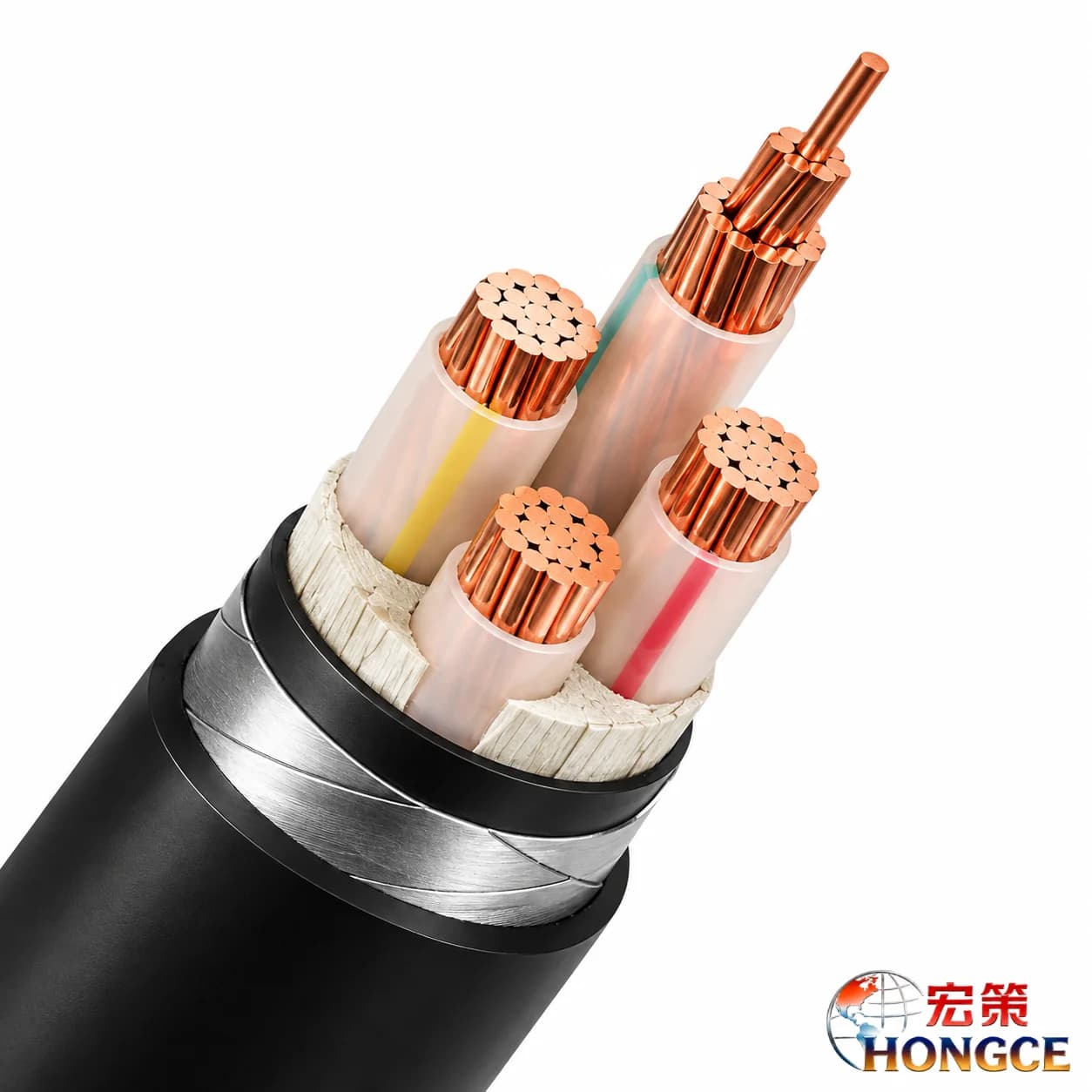
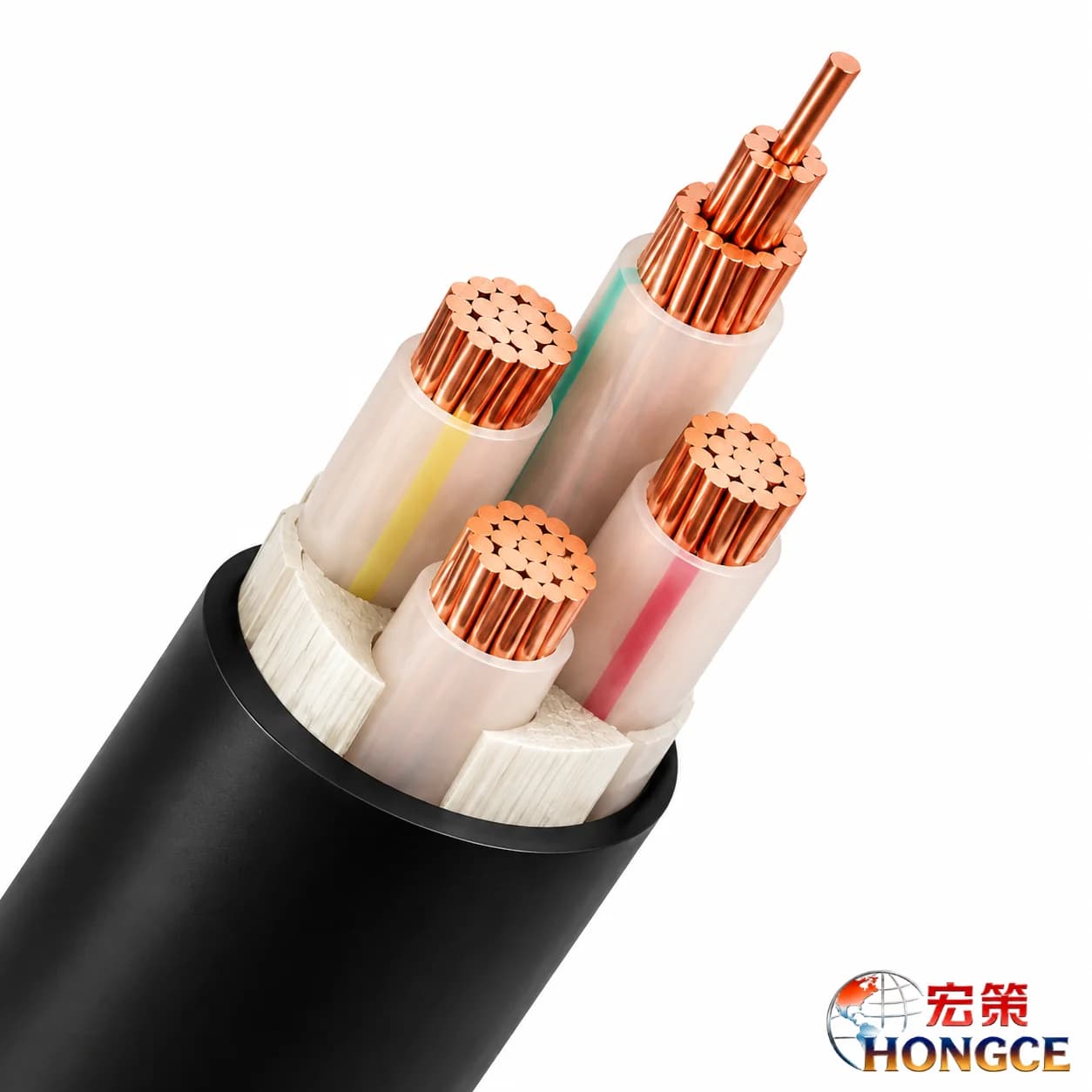
To further understand why buying from a direct manufacturer with strict quality control matters, consider the following technical comparison of a standard (Specification: Copper XLPE-Insulated Steel-Tape-Armored Power Cable 4x16 mm²) versus a typical substandard product often supplied by unverified traders.
Technical Parameter (4x16 mm² YJV22) | Authentic Standard Cable (Direct Manufacturer) | Substandard Cable (Commonly traded) | Impact on Project / Consequence |
Conductor Material | 99.9% Oxygen-Free Pure Copper | Recycled or Impure Copper Alloy | Impure copper increases resistance, leading to overheating and potential fire hazards. |
Actual Conductor Diameter | Strictly ≥ 4.70 mm (Meets IEC 60228 Class 2) | Shrinkage to 4.20 mm - 4.50 mm | Fails load requirements; causes voltage drops and reduced energy efficiency. |
Insulation Thickness (XLPE) | Nominal 0.7 mm (Meets IEC 60502-1) | Uneven thickness, often < 0.5 mm | Poor insulation reduces mechanical protection and increases the risk of short circuits. |
Armor Layer (Steel Tape) | Double layer galvanized steel tape, ≥ 0.2mm thick | Single layer or non-galvanized thin iron | Fails to provide adequate physical protection against underground mechanical stress or rodents. |
Max. Conductor DC Resistance (20°C) | ≤ 1.15 Ω/km | > 1.35 Ω/km | Fails electrical inspection; results in excessive power loss over long distances. |
Testing & Certification | Full laboratory test report provided per batch | No objective test reports available | Delays in project handover and failure to secure safety permits. |
Note: Data parameters are based on standard IEC 60502-1 requirements.
How to Identify a Genuine Power Cable Manufacturer in China
If you are sourcing for a critical engineering project, taking a few extra steps during the supplier verification phase can save your company from significant losses. Here is how to distinguish a real factory from a trading company:
1. Ask for Virtual Factory Tours Do not rely solely on photos, which can be easily copied from other websites. Request a live video call via WhatsApp, Zoom, or WeChat during Chinese working hours. Ask the sales representative to walk onto the factory floor and show you the wire drawing machines, extrusion lines, and stranding equipment. A genuine manufacturer will gladly accommodate this request.
2. Check Quality Testing Equipment A proper power cable manufacturer must have an in-house laboratory to ensure product compliance. Ask to see their testing equipment, such as spark testers, tensile strength machines, and conductor resistance bridges. If a supplier cannot produce images or videos of their own testing facility, they are likely outsourcing the production.
3. Verify Business Licenses and ISO Certificates Request the supplier's Chinese business license and ISO 9001 certification. You can translate the business scope (经营范围) on the license. A real factory's license will explicitly state "Manufacture" or "Production" (制造/生产) of wire and cable, whereas a trading company's license will only state "Wholesale" or "Trade" (批发/销售).
Zhejiang Hongce Cables: Your Reliable Direct Source Factory
Located in Huzhou, Zhejiang—a hub of Chinese manufacturing with strategic proximity to the Shanghai and Ningbo ports—Zhejiang Hongce Cables Co., Ltd. operates as a dedicated source manufacturer tailored to the needs of global SMEs.
We understand that overseas contractors require more than just low prices; they need technical reliability, transparent communication, and supply chain flexibility. By maintaining our own robust production lines and strict in-house quality testing laboratories, we guarantee that every spool of wire leaving our facility aligns with rigorous international standards (IEC, BS, TÜV). We specialize in supporting mid-sized projects with flexible MOQs, ensuring that our clients achieve fire-safety compliance, stable electrical transmission, and optimized procurement budgets without the risks associated with intermediaries.

Conclusion & Takeaways
When comparing a trading company to direct power cable manufacturers, the decision ultimately comes down to risk management and cost control. While trading companies may offer a broader catalog of general goods, critical infrastructure materials like electrical cables require the accountability, engineering expertise, and transparent pricing that only a source factory can provide. By partnering directly with a manufacturer, you secure predictable lead times, strict quality assurance, and the flexibility needed to keep your projects moving forward smoothly.
Ready to Start Your Project? Tired of navigating hidden markups and unverified quality claims? Partner with a factory that understands the demands of your engineering projects. Contact Hongce Cables today for a direct factory quote, technical data sheets, and flexible manufacturing solutions tailored to your specific requirements.
About the Author
Liangce Chi currently serves as Southeast Asia Market Analyst at Zhejiang Hongce Cable Co., Ltd. His work involves in-depth research covering power infrastructure construction across Southeast Asia, price trends of bulk commodities, and cross-border cable trade compliance. Combining insights from macroeconomic data with extensive hands-on cross-border trade experience, Liangce Chi goes beyond theoretical research and conducts on-site assessments of industrial manufacturing investment climates in Thailand, Vietnam, Indonesia and other Southeast Asian markets. Drawing on his professional work, he secured bulk orders from well-established Thai enterprises for Zhejiang Hongce Cable. This landmark achievement has laid a solid quantitative foundation for the company to further expand its market share of industrial building support cables in Thailand and the broader Southeast Asian region.