Cable Current Rating Chart: Cost Optimization Without Safety Loss
How to size cables for IEC compliance and budget — covering ambient temperature, installation method, grouping, and insulation derating, plus a 430,000 RMB Thailand industrial case.
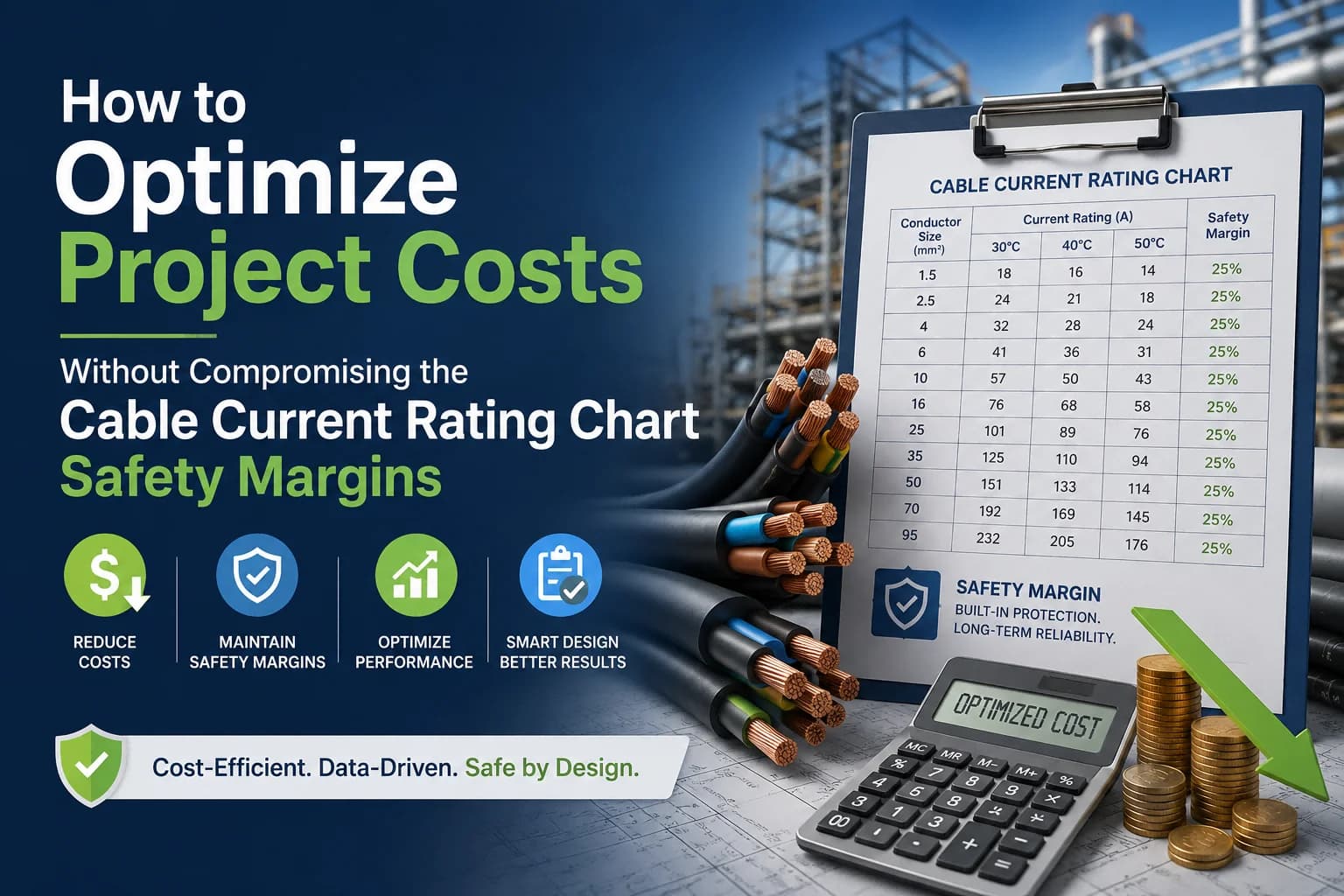
True cable cost optimization comes from eliminating over-design while never crossing the minimum safety margin defined by international standards. A 430,000 RMB Thailand industrial project case shows how data-driven derating analysis changed the entire procurement strategy — and why the customer ultimately chose copper over aluminum.
Optimizing project costs while strictly adhering to the cable current rating chart safety margins means finding the ideal balance between capital expenditure and long-term reliability. Many project owners mistakenly believe that reducing conductor size is the fastest way to lower costs. In reality, blindly downsizing often results in overheating, accelerated insulation aging, and total system failure within a few years.
A cable current rating chart is not a simple ampacity table — it represents a scientifically established safety baseline developed under specific environmental and installation assumptions. True cost optimization comes from eliminating unnecessary over-design while never crossing the minimum safety margin defined by international standards. This requires deep engineering knowledge, accurate load analysis, and a thorough understanding of derating factors.
This article explains how experienced electrical engineers can reduce project costs without compromising safety, supported by a real export case from Zhejiang Hongce Cable Co., Ltd. — a 430,000 RMB Thailand industrial cable project where data-driven derating analysis changed the entire procurement strategy.
Why the Cable Current Rating Chart Should Never Be Ignored
In modern electrical engineering, cable procurement frequently represents one of the largest material costs. Procurement teams often pressure engineers to reduce costs by selecting smaller conductor sizes or cheaper materials. Although these decisions may appear financially attractive during the purchasing stage, they often generate substantially higher lifecycle costs after installation.
The current values listed in every cable current rating chart already include carefully established thermal limits. These limits ensure that conductor temperatures remain safe under expected load conditions. When conductors continuously operate beyond these limits, several problems gradually develop:
- Accelerated insulation aging
- Increased conductor resistance
- Greater power losses
- Higher operating temperatures
- Premature insulation cracking
- Reduced system reliability
- Increased maintenance costs
- Elevated risk of electrical fire
Electrical failures caused by overheating rarely occur immediately. Instead, insulation degradation accumulates over years of continuous operation until an unexpected failure occurs. Replacing damaged cables, interrupting production, and repairing electrical systems often cost many times more than the original savings achieved by selecting undersized conductors.
Therefore, experienced electrical designers understand that the safety margins defined in the cable current rating chart are not excessive conservatism — they are essential engineering protection for both equipment and personnel.
What Actually Determines Cable Current Carrying Capacity
Many people assume that conductor size alone determines current carrying capacity. In reality, cable ampacity depends on a combination of thermal and environmental conditions. Four factors carry the most weight in any sizing decision:
Ambient Temperature
The majority of international cable current rating charts are based on a standard ambient temperature of 30°C for air installation and 20°C for buried cables. As ambient temperature rises, the cable's ability to dissipate heat decreases dramatically.
For example:
- 30°C — Full rated current
- 35°C — Current rating begins to decrease
- 40°C — Significant derating required
- 45°C and above — Large reductions in allowable current
In tropical regions such as Southeast Asia, the Middle East, Africa, and parts of Australia, ignoring ambient temperature correction factors can easily result in overloaded cables.
Installation Method
Heat dissipation varies greatly depending on cable installation. Examples include:
- Installed in free air
- Installed inside conduits
- Buried underground
- Installed on cable trays
- Grouped with multiple circuits
- Installed inside thermal insulation
A cable installed in open air may safely carry considerably more current than the same cable installed inside a crowded conduit.
Cable Grouping
When multiple power cables are installed together, they continuously heat each other. International standards therefore require grouping correction factors that reduce allowable current. Ignoring grouping factors is one of the most common causes of cable overheating in industrial plants.
Insulation Type
Different insulation materials have different maximum operating temperatures. For example:
- PVC: 70°C
- XLPE: 90°C
- EPR: 90°C
Higher-temperature insulation can increase current carrying capacity, but only when all other design conditions are properly evaluated. For a deeper dive into how these material limits are verified during quality control, see our cable testing standards guide.
International Standards Make Safety Margins Mandatory
Global engineering projects increasingly require compliance with internationally recognized electrical standards. Among the most influential are the IEC 60364 series, which provide guidance for the selection and installation of low-voltage electrical equipment, including current-carrying capacities, correction factors, and protection coordination.
These standards recognize that no single cable current rating applies to every project. Instead, designers must account for:
- Ambient temperature
- Soil thermal resistivity
- Installation depth
- Cable grouping
- Ventilation
- Harmonic currents
- Duty cycles
- Load diversity
Failure to apply these correction factors may result in installations that technically satisfy procurement requirements but fail engineering compliance inspections. For international EPC contractors, consultants, and project owners, compliance is therefore not only a safety issue but also a contractual obligation. The IEC standards webstore lists the current published versions, and engineering tools like Cableizer's thermal documentation demonstrate how derating calculations work in practice. The procurement framework split across SEA markets — discussed in our BS, IEC, GB standards analysis for Southeast Asia — also shapes which derating tables apply on any given project.
Case Study: 430,000 RMB Thailand Industrial Cable Project
One of the best examples illustrating proper cost optimization came from a recent export project completed by Zhejiang Hongce Cable Co., Ltd. Hongce Cable secured a cable supply contract worth approximately 430,000 RMB through a well-known trading company in Ningbo. The final destination was a large industrial facility in Thailand.
During the initial quotation stage, the overseas customer requested replacing all specified copper conductors with aluminum conductors in an effort to reduce procurement costs. At first glance, the proposal appeared financially reasonable. However, our engineering team immediately recognized several engineering concerns and initiated a detailed technical review covering:
- Actual load current
- Installation method
- Cable routing
- Ambient temperature
- Future expansion plans
- Local electrical regulations
- Applicable IEC requirements
This engineering-first approach ultimately changed the entire procurement strategy.
Why Ambient Temperature Changed the Cable Selection
Thailand's tropical climate presents one of the most demanding environments for power cables. At the project site, ambient temperatures frequently reached 40°C, considerably higher than the standard 30°C reference used in most cable current rating charts. This meant that every cable required temperature derating.
After applying the appropriate correction factors, the originally proposed aluminum cables no longer provided sufficient current carrying capacity. Simply replacing copper with aluminum of the same cross-sectional area would have resulted in conductor temperatures exceeding safe operating limits.
To satisfy the design current safely, the aluminum conductor size would have required significant enlargement. This single change created several unexpected consequences:
- Larger conduits
- Bigger cable trays
- Increased installation labor
- More difficult cable pulling
- Higher termination costs
- Larger cable glands
- Larger cable lugs
- Increased bending radius requirements
Consequently, much of the initial material savings disappeared.
Copper vs Aluminum: Beyond Initial Purchase Price
The comparison between copper and aluminum should never focus solely on material cost. Instead, engineers should evaluate the total cost of ownership throughout the entire service life of the installation. Copper conductors offer several technical advantages:
- Higher electrical conductivity
- Smaller conductor size for equivalent current
- Lower voltage drop
- Better mechanical strength
- Superior corrosion resistance
- Lower thermal expansion
- Longer service life
- Lower long-term maintenance
Aluminum conductors remain an excellent solution for many utility and overhead transmission applications. However, in high-temperature industrial environments requiring tight ampacity tolerances, copper consistently delivers better lifecycle economics.
Data-Driven Engineering Won the Customer's Confidence
Rather than relying on opinions, Hongce Cable prepared a comprehensive engineering report supported by current rating calculations, temperature derating analyses, and voltage drop assessments. The report demonstrated that although copper cables carried a higher unit price, they enabled:
- Smaller conductor sizes
- Reduced conduit dimensions
- Easier installation
- Lower energy losses
- Lower maintenance expenses
- Improved reliability
- Longer service life
- Full compliance with IEC requirements
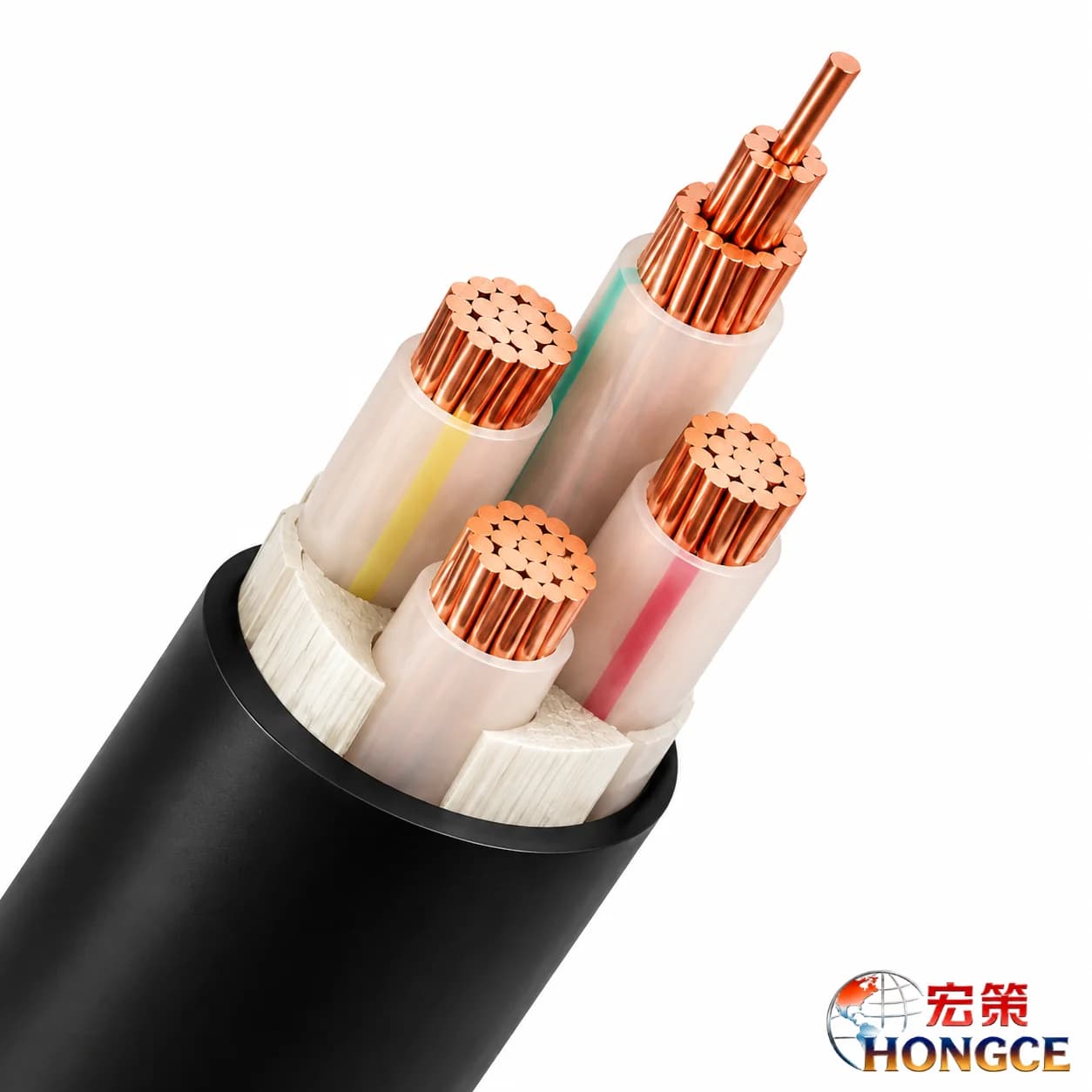
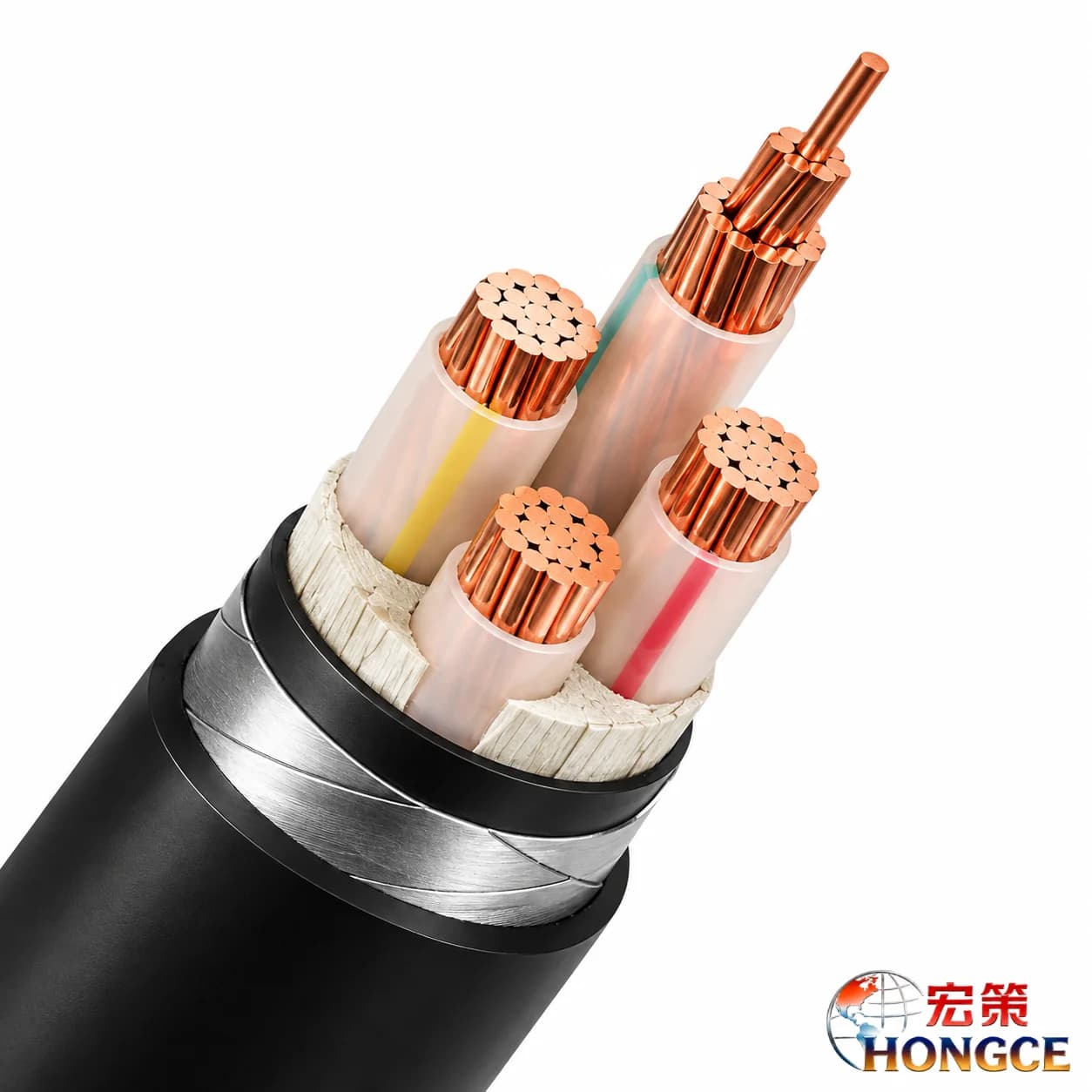
After reviewing the calculations, the customer agreed to replace the proposed aluminum cables with Hongce's YJV 0.6/1kV copper unarmored power cable and YJV22 0.6/1kV armored variant where mechanical protection was required. The project achieved its target budget without compromising electrical safety. More importantly, the client avoided potentially enormous maintenance and replacement costs over the operational life of the facility. Similar derating-driven specification reviews shape the Indonesian 20kV market — covered in our Indonesia 20kV procurement notes.
Practical Strategies for Optimizing Cable Costs Without Sacrificing Safety
Companies seeking to reduce cable costs while maintaining full compliance should adopt several engineering best practices:
- Always perform accurate load calculations rather than relying on rough estimates.
- Evaluate every environmental derating factor before selecting conductor sizes.
- Optimize installation routes to improve heat dissipation.
- Consider higher-performance insulation materials when appropriate.
- Compare total lifecycle cost instead of only the purchase price.
- Work closely with experienced cable manufacturers capable of providing engineering support rather than simply supplying products.
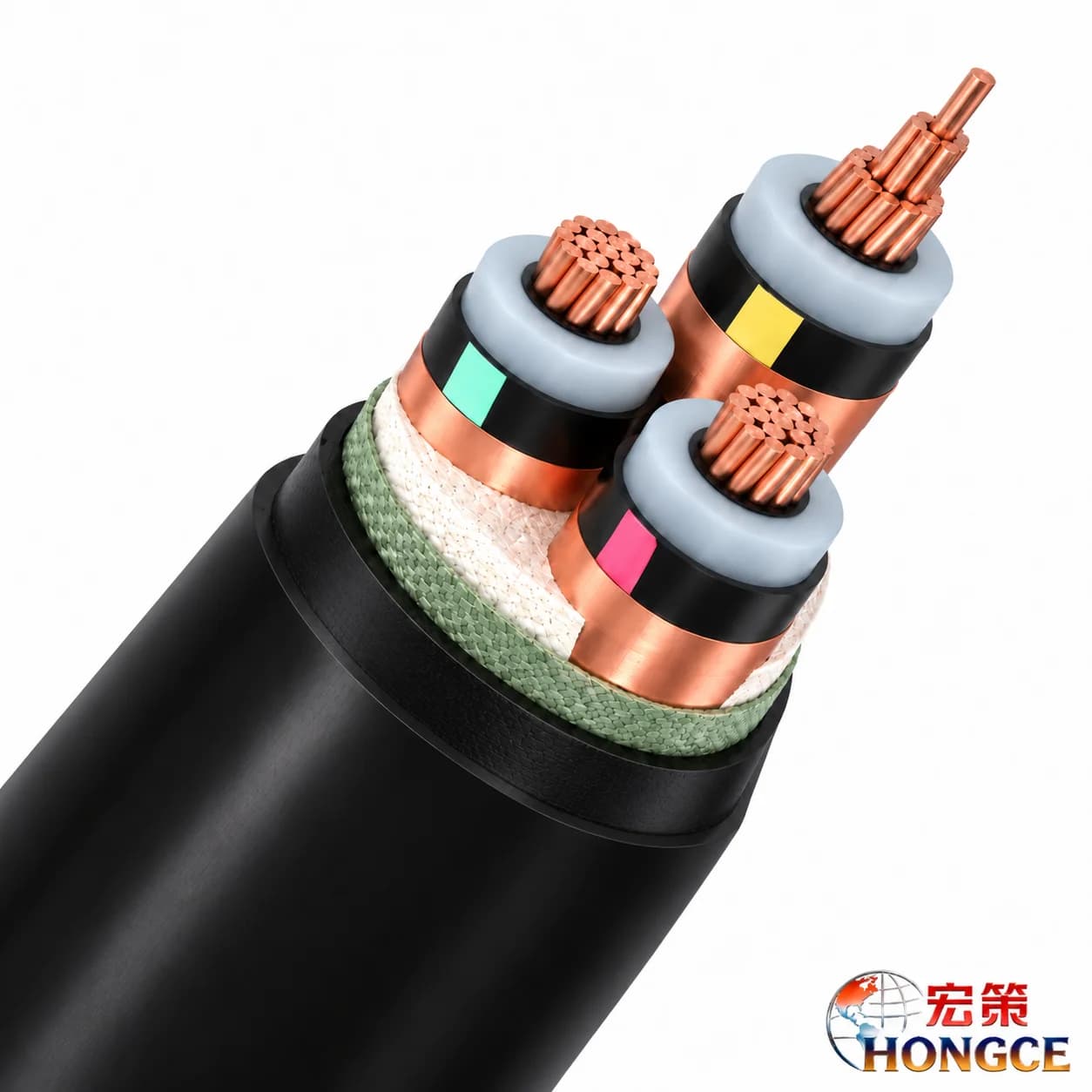
These practices often reduce total project costs far more effectively than simply purchasing cheaper conductors. For medium-voltage projects, the sizing analysis becomes even more critical — see our YJV 8.7/15kV 3-core MV cable specifications for typical ampacity tables and derating curves.
Conclusion
Successful engineering projects are not defined by the lowest procurement cost but by achieving the optimal balance between safety, performance, compliance, and lifecycle economics. The cable current rating chart serves as the foundation for every reliable cable selection. It reflects decades of engineering research, thermal testing, and international standardization.
The Thailand export project undertaken by Zhejiang Hongce Cable Co., Ltd. clearly demonstrates that data-driven engineering consistently outperforms price-driven decision-making. For EPC contractors, electrical consultants, industrial plant owners, and infrastructure developers, the smartest investment is not necessarily the cheapest cable — it is the cable properly engineered for the specific environment and load profile.
When cable selection is guided by accurate calculations instead of assumptions, projects achieve lower lifecycle costs, higher operational reliability, and greater long-term value.
About the Author
Junjie Cheng – Senior Cable Engineer at Hongce Cable Junjie Cheng is the Senior Cable Engineer at Zhejiang Hongce Cable Co., Ltd., specializing in power cable design, manufacturing processes, and international quality control. He leads Hongce Cable’s technical team to deliver customized cabling solutions for global infrastructure and power grids. Mr. Cheng specializes in the engineering of medium-to-high voltage cables. He recently spearheaded the successful technical review and production of a RMB 5.5 million (approx. USD 760K) export project to Malaysia, delivering high-performance YJLV 6/10KV 3*150 mm² XLPE insulated aluminum power cables. His deep expertise in triple-layer co-extrusion and drum twister cabling guaranteed the strict mechanical and electrical performance required for Malaysia's power environment. Under his technical guidance, Hongce Cable ensures all products comply with IEC, BS, ASTM, and CE certifications, providing safe, efficient, and certified power transmission solutions to global B2B buyers.