Why Oxygen-Free Copper Matters for Industrial Power and Control Cables
How high-purity copper supports lower resistance, cleaner signals, and longer service life in demanding cable installations.
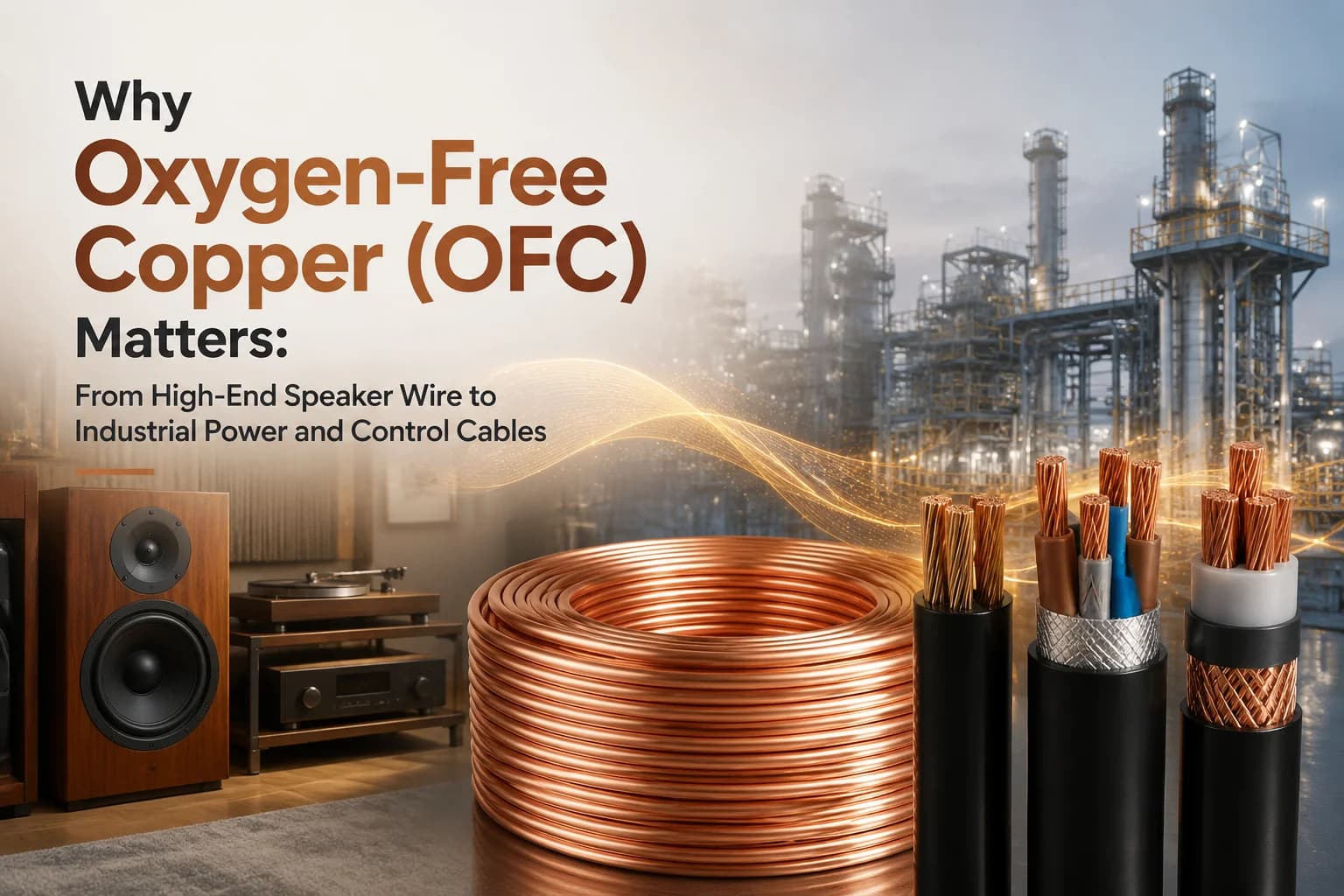
Learn how oxygen-free copper affects conductor resistance, signal stability, corrosion resistance, and long-term reliability in industrial cable applications.
When audiophiles discuss high-end sound setups, one term consistently takes center stage: oxygen-free copper speaker wire. Oxygen free copper speaker wire is manufactured using refined copper with oxygen content reduced to less than 0.001%, offering superior electrical conductivity, minimized signal distortion, and enhanced resistance to corrosion over time. By eliminating residual oxygen and impurities during the manufacturing process, this specialized grade of copper ensures that electrical signals travel with absolute fidelity, preventing micro-oxidization that can degrade performance in delicate audio circuits. While widely celebrated in audio systems, these exact technological principles are the backbone of high-performance industrial power and control cables.
The Metallurgy Behind High-Purity Copper
To understand why oxygen-free copper (OFC) matters beyond home entertainment and hi-fi audio, we must first look at what happens at a microscopic level inside standard electrolytic tough pitch (ETP) copper. Standard copper typically contains around 200 to 400 parts per million (ppm) of oxygen, primarily existing as cuprous oxide (Cu2O) particles. These particles form boundaries between individual copper crystals, which can impede electron flow and act as potential sites for embrittlement and corrosion under thermal or mechanical stress.
Through specialized refining processes—such as Vacuum Induction Melting or Properzi continuous casting—OFC reduces oxygen content to levels below 0.001% (10 ppm). This dramatic reduction increases electrical conductivity from standard levels to approximately 101% to 102% International Annealed Copper Standard (IACS). For demanding industrial environments, this means lower resistive energy losses, superior ductility, and extended service life under continuous flexing and vibration.Here is the English translation of the comparison table:
Table: Comparison of Electrolytic Tough Pitch (ETP) Copper vs. Oxygen-Free Copper (OFC)
Performance Metric | Electrolytic Tough Pitch (ETP) Copper | Oxygen-Free Copper (OFC) | Industrial / Audio Advantage |
Oxygen Content | 200 – 400 ppm | < 0.001%(< 10 ppm) | Eliminates oxidative impurities, preventing micro-oxidative corrosion |
Electrical Conductivity (IACS) | Approx 100% | 101% - 102% | Lowers electrical resistance and reduces Joule heating (I2R losses) |
Microstructure | Presence of cuprous oxide (Cu2O) particle boundaries | Clean grain boundaries, free of oxide inclusions | Improves electron flow and enhances resistance to thermal/mechanical stress |
Hydrogen Embrittlement Risk | Higher (prone to reacting with hydrogen gas at high temperatures to form vapor bubbles) | Extremely low (lacks residual oxygen for reaction) | Suitable for extreme high-humidity or high-temperature environments such as marine and chemical plants |
Typical Applications | General building wiring, basic power transmission | High-end speaker wire, robotic control cables, automated sensor signal transmission | Ensures distortion-free signals, highly efficient power transmission, and long-term durability |
Why Industrial Environments Demand OFC Standards
Modern industrial facilities, automated manufacturing plants, and heavy-duty machinery operate in environments far harsher than a residential living room. Control panels, robotic assembly arms, and continuous production lines subject internal wiring to relentless mechanical stress, temperature fluctuations, and electromagnetic interference (EMI).
Combating Signal Attenuation and Noise
Industrial automation relies on the transmission of minuscule analog and digital signals between sensors, Programmable Logic Controllers (PLCs), and actuators. Even minor resistance fluctuations or signal distortions can lead to erroneous data readings, resulting in costly production downtime or faulty quality control. Utilizing high-purity conductors ensures precise signal integrity in automation across long cable runs, keeping communication channels clean, accurate, and completely free of packet drops or voltage drops.
Maximizing Energy Efficiency in Power Distribution
In heavy industrial setups, energy efficiency is directly tied to operational expenditure. High electrical resistance leads directly to internal heat generation, which wastes power and degrades surrounding insulation materials over time. Achieving low resistance power transmission through refined, high-purity conductors drastically cuts down Joule heating (I2R losses), ensuring that maximum electrical power reaches heavy machinery safely and efficiently.
Bridging Audio Precision and Industrial Durability
The crossover from audio engineering to industrial cabling lies in the physics of signal transmission. Just as a high-end speaker cable must deliver uncolored sound transients without losing micro-dynamics, an industrial control cable must transmit precise control pulses without phase shift or attenuation.
Furthermore, industrial environments often introduce corrosive elements, moisture, and chemical exposure. The absence of oxygen and gaseous impurities in OFC minimizes the risk of "hydrogen embrittlement"—a destructive phenomenon that occurs when hydrogen gas diffuses into copper at high temperatures and reacts with trapped oxygen to form water vapor bubbles. By eliminating this risk, high-purity copper cables maintain structural integrity and low electrical resistance even in extreme operating conditions, such as marine installations, chemical processing plants, and high-temperature manufacturing floors.
Advanced Manufacturing and OEM Customization Capabilities
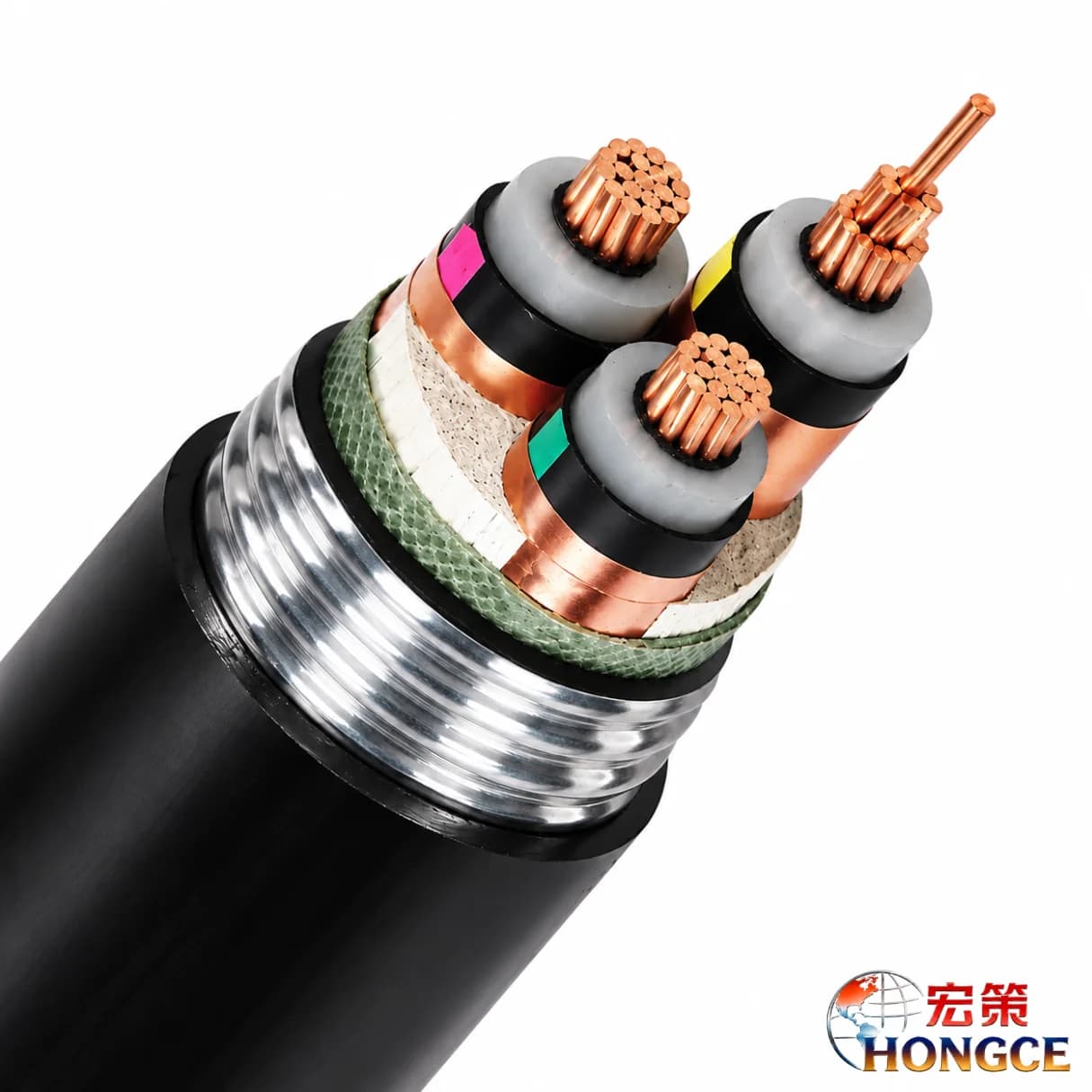
Engineering cables that harness the exceptional properties of high-purity copper requires state-of-the-art manufacturing infrastructure, stringent quality control, and deep metallurgical expertise. Leveraging our advanced copper refining and multi-strand extrusion capabilities, we engineer cables that meet these exacting OFC standards—from custom high-purity applications to our core lines of industrial power and control cables
Whether you require specialized multi-core shielded control wiring for robotic systems or heavy-duty power transmission lines designed for high-load electrical grids, our production facilities ensure tight concentricity, uniform strand layouts, and superior insulation bonding. We work closely with global industrial partners to deliver tailored OEM and ODM solutions that comply with international standards such as IEC, UL, and CE.
Global Standards and International Compliance
As industrial operations expand globally, adherence to regional and international safety standards is paramount. High-purity industrial cables must pass rigorous evaluations regarding flame retardancy, smoke density, halogen content, and mechanical durability.
For instance, modern industrial projects—ranging from automated warehouses to green-energy power generation facilities—frequently demand compliance with stringent local electrical codes. Institutions such as the International Electrotechnical Commission (IEC)and standards organizations like Underwriters Laboratories (UL)provide comprehensive guidelines on conductor resistance, insulation performance, and thermal endurance. Integrating certified OFC-grade principles into industrial manufacturing ensures that infrastructure projects meet both local regulatory frameworks and international benchmarks for safety and reliability.

Future Outlook: The Shift Toward High-Efficiency Infrastructure
As global industries accelerate toward smart manufacturing, Industry 4.0 automation, and energy-efficient electrification, the quality of underlying raw materials cannot be overlooked. While oxygen-free copper earned its initial fame bringing clarity to music lovers, its true value lies in its ability to eliminate mi croscopic bottlenecks in electrical flow.
By upgrading to high-purity copper solutions, facility managers and electrical engineers can significantly reduce energy losses, protect sensitive control systems from electrical noise, and future-proof their operations against premature cable failure. Investing in superior conductor metallurgy is not merely an upgrade in material—it is a foundational commitment to long-term industrial reliability, safety, and peak performance.
About the Author
Liangce Chi currently serves as Southeast Asia Market Analyst at Zhejiang Hongce Cable Co., Ltd. His work involves in-depth research covering power infrastructure construction across Southeast Asia, price trends of bulk commodities, and cross-border cable trade compliance. Combining insights from macroeconomic data with extensive hands-on cross-border trade experience, Liangce Chi goes beyond theoretical research and conducts on-site assessments of industrial manufacturing investment climates in Thailand, Vietnam, Indonesia and other Southeast Asian markets. Drawing on his professional work, he secured bulk orders from well-established Thai enterprises for Zhejiang Hongce Cable. This landmark achievement has laid a solid quantitative foundation for the company to further expand its market share of industrial building support cables in Thailand and the broader Southeast Asian region.