YJV22 0.6/1kV Copper XLPE-Insulated Steel-Tape-Armored Power Cable
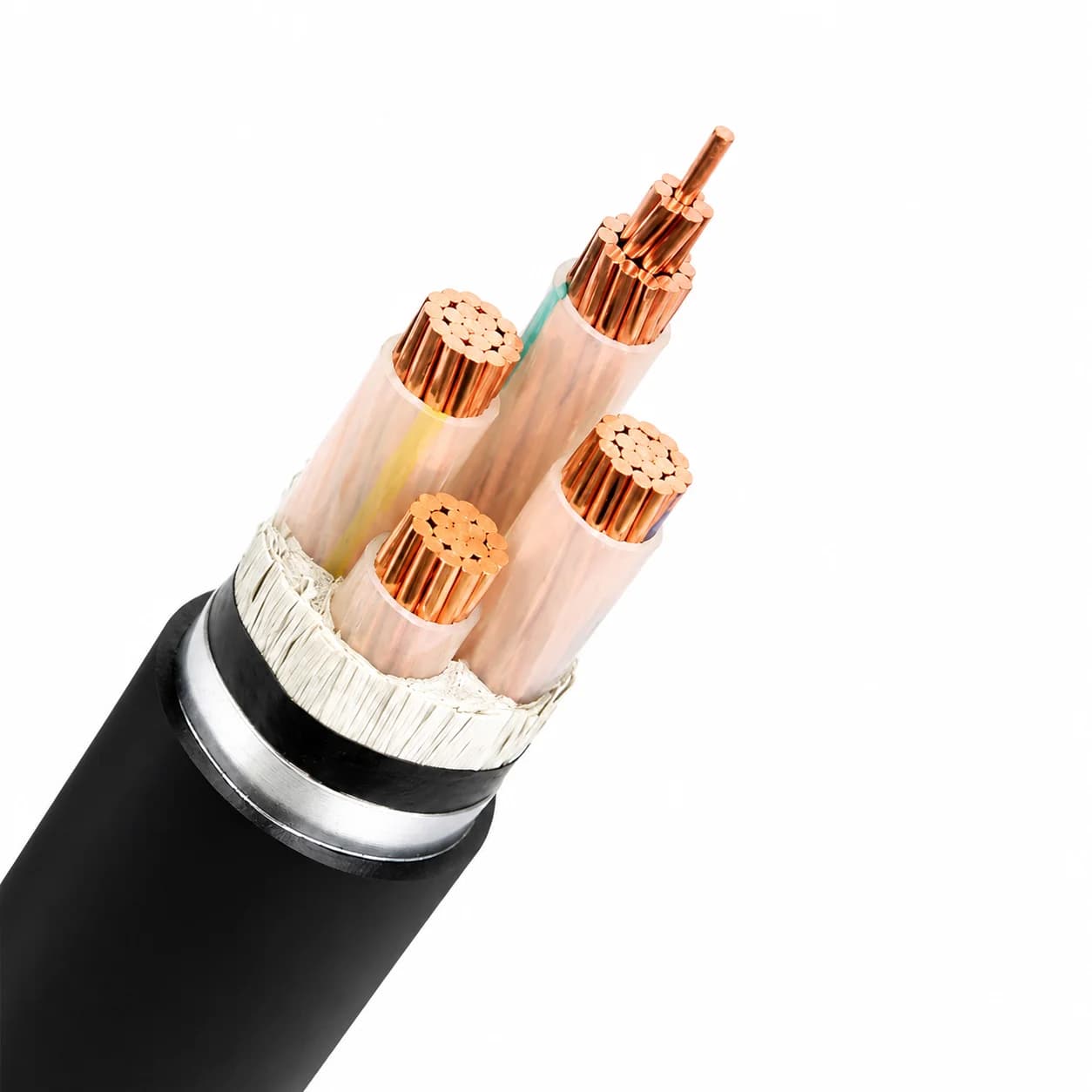
YJV22 adds a galvanized steel-tape armor layer to the YJV construction — the right choice when the cable will be direct buried, run through a cable trench with shared utilities, or installed where transverse mechanical impact is a real risk. PVC inner and outer jackets sandwich the armor for corrosion protection.
Technical Specifications
| Conductor material | Annealed copper, Class 2 stranded |
| Insulation | Cross-linked polyethylene (XLPE) |
| Inner sheath / bedding | PVC, extruded |
| Armor | Galvanized steel tape, double-layer 50% overlap |
| Outer sheath | PVC, ST2 compound |
| Rated voltage U₀/U | 0.6/1 kV |
| Max conductor temperature | 90 °C |
| Min bending radius (armored) | 15 D |
| Cross-sections available | 4 – 400 mm² |
| Core configurations | 2 / 3 / 4 / 5 cores; 3+1, 3+2, 4+1 |
| Installation environments | Direct buried, trench, tray, duct |
| Earth bonding via armor | Yes, with proper gland kit |
Compliance Standards
- ✓IEC 60502-1
- ✓IEC 60228 (Conductors)
- ✓GB/T 12706.1
- ✓SNI 04-2625-1
Overview
Construction order from conductor outward: Class 2 stranded copper, XLPE insulation, inner PVC bedding, two-tape galvanized steel armor with 50% overlap, PVC outer sheath. The armor adds transverse mechanical protection and a fault-current return path; the outer PVC prevents soil corrosion and abrasion during pull-in. Voltage rating, temperature limits, and bending radius mirror YJV — the only construction delta is the armor.
Key Features
Direct-buried ready
Armor + outer PVC qualifies the cable for direct burial under IEC 60502-1, no need for additional duct or pipe.
Mechanical impact tolerance
Two-tape steel armor protects against shovel and excavator strikes during routine excavation work.
PEN combined neutral / earth
Armor can serve as combined PEN return when bonded at both ends per TN-C wiring system rules.
Applications
Substation outdoor circuits
Buried cable runs from outdoor transformers to building service entrances and yard distribution boards.
Trench-shared utility routes
Shared cable trenches where mechanical impact from neighboring works is a recognized risk.