What is the Difference Between MV and LV Power Cables? Key Specifications Explained
Avoid Costly Specification Errors: Compare Layer Structures, Voltage Ratings, and Application Cases for Smart Sourcing.

Selecting the wrong power cable can lead to severe voltage drop, insulation failure, and costly downtime. But how do Medium Voltage (MV) and Low Voltage (LV) cables truly differ? This comprehensive guide breaks down their structural layers, voltage ratings, and shielding requirements. Featuring real-world case studies and technical comparison tables, discover how to optimize your project's safety, efficiency, and procurement budget today.
In the complex landscape of electrical infrastructure, selecting the appropriate cabling system is a critical engineering decision that impacts project safety, operational efficiency, and long-term procurement budgets. For engineering, procurement, and construction (EPC) contractors, as well as facility managers, understanding the precise technical boundaries between different voltage grades is essential.
A common challenge during the design phase of power distribution networks is distinguishing the specific applications, structural variations, and performance metrics of Medium Voltage (MV) and Low Voltage (LV) power cables. Misjudging these specifications can lead to severe consequences, ranging from inefficient power delivery and excessive voltage drop to catastrophic insulation failure.
This comprehensive guide explores the fundamental differences between MV and LV power cables, details their key specifications, and examines real-world case studies to help B2B buyers and engineers make informed, compliant, and cost-effective sourcing decisions.

Understanding the Basics: LV vs. MV Cables
Before delving into the technical specifications, it is necessary to establish the standard definitions of low and medium voltage within the context of industrial power distribution. These definitions are largely governed by international standardizing bodies such as the International Electrotechnical Commission (IEC).
What are Low Voltage (LV) Power Cables?
Low Voltage power cables are generally defined as cables designed to operate at voltage levels up to 1kV (1000V) Alternating Current (AC) or 1.5kV Direct Current (DC).
LV cables form the final leg of the power distribution network. They are utilized to deliver electricity from local distribution transformers directly to end-user equipment, lighting systems, control panels, and residential or commercial outlets. Due to the lower voltage stress, their structural design is relatively straightforward, focusing primarily on basic insulation and physical protection.
What are Medium Voltage (MV) Power Cables?
Medium voltage power cables operate at a significantly higher voltage range, typically defined by the IEC as anywhere from 1kV up to 35kV (or 36kV).
MV cables are the backbone of primary distribution networks. They are essential for transmitting power over longer distances—such as from a main utility grid substation to a large industrial facility, or from renewable energy generation sites (like solar farms) to the main grid. Because they handle substantially higher electrical stress, MV cables require a highly complex internal architecture to manage the electric field and prevent phenomena such as partial discharge or corona degradation.
Core Differences Between MV and LV Power Cables
The distinction between MV and LV cables goes far beyond their voltage ratings. The higher the voltage, the more complex the cable's physical and chemical engineering becomes.
Cable Construction and Insulation Layers
The most significant difference lies in the cross-sectional construction.
An LV cable typically consists of three main components: a conductor (copper or aluminum), an insulation layer (usually PVC or XLPE), and an outer protective sheath.
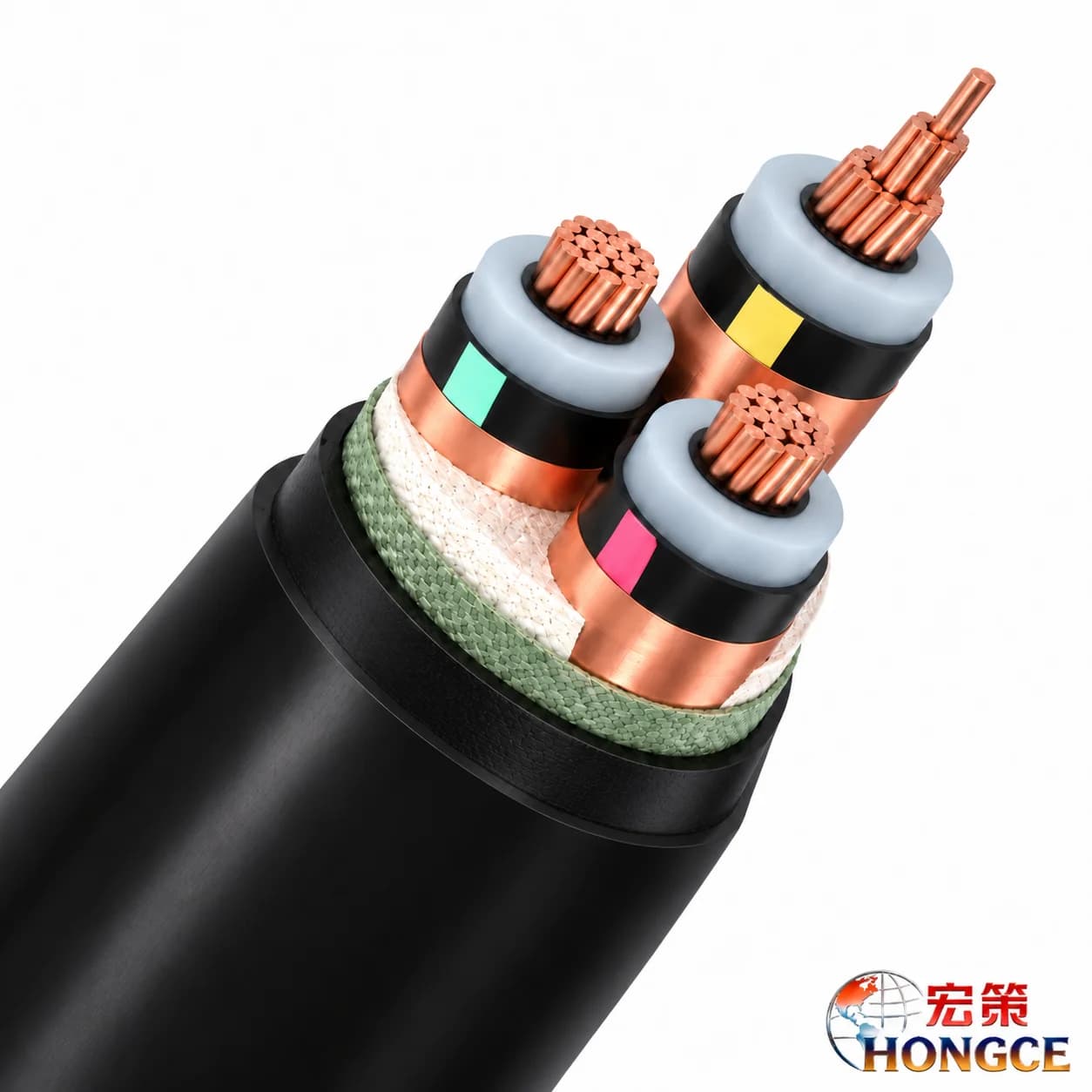
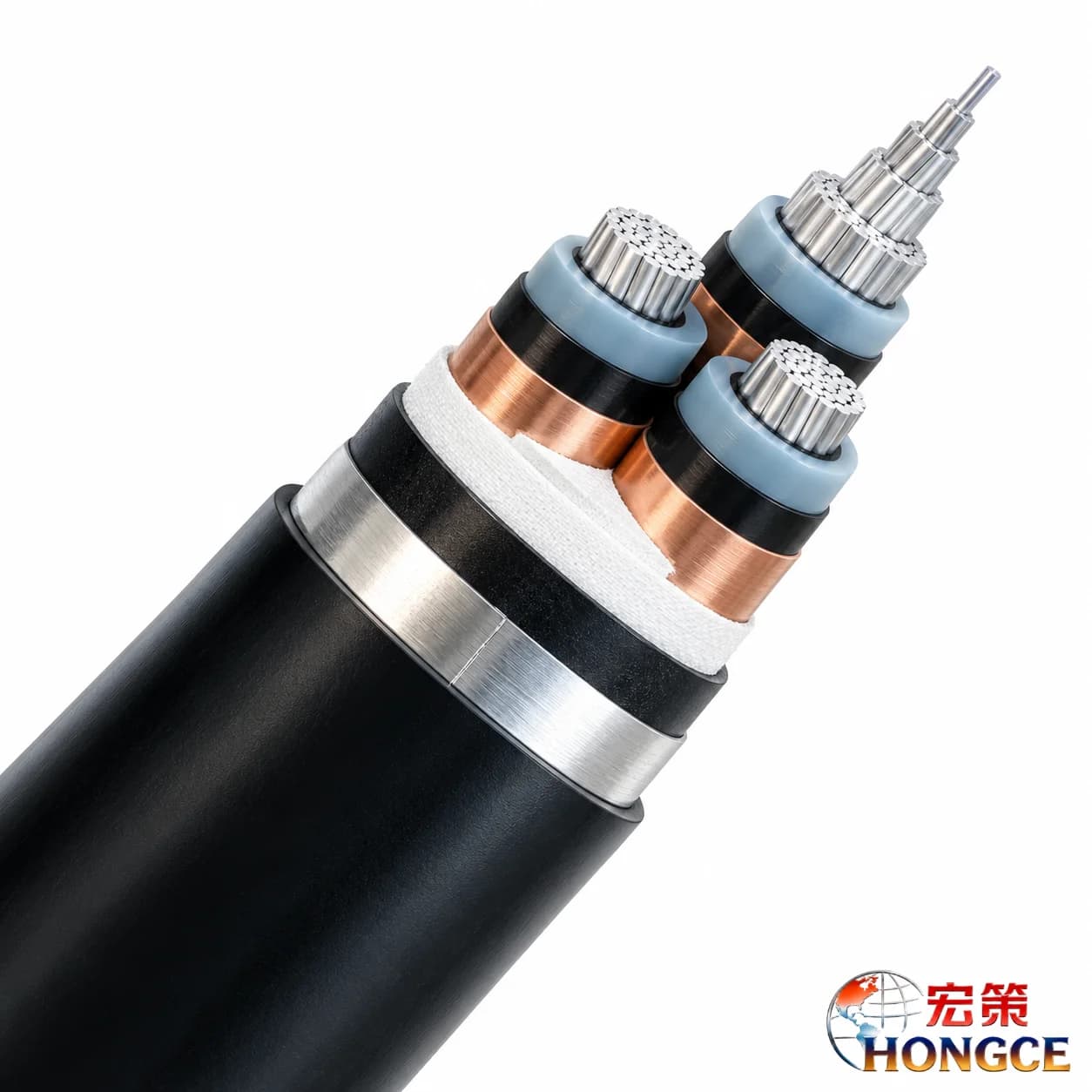
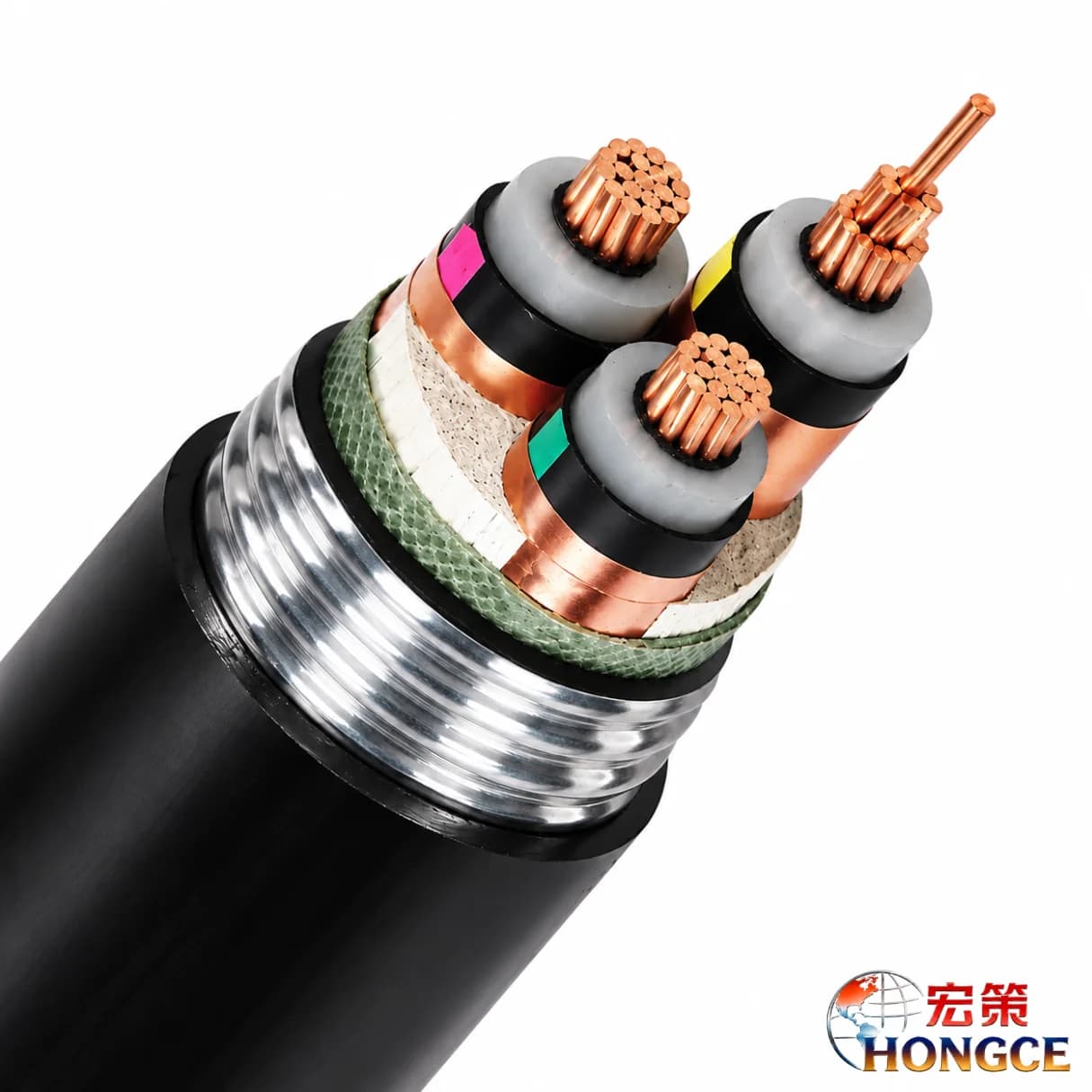
In contrast, medium voltage power cables require a sophisticated multi-layered construction to ensure electrical stability. A standard MV cable includes:
- Conductor: Stranded copper or aluminum for flexibility and conductivity.
- Conductor Screen (Semiconducting Layer): A crucial layer that smooths out the electrical field stress at the interface between the conductor and the insulation, preventing localized high electrical gradients.
- Insulation: Typically Cross-Linked Polyethylene (XLPE) or Ethylene Propylene Rubber (EPR), providing high dielectric strength.
- Insulation Screen (Semiconducting Layer): Ensures the electrical field remains contained within the insulation uniformly.
- Metallic Screen / Shield: Copper tape or copper wires designed to carry fault currents to the ground and neutralize the electrical field outside the cable.
- Inner Sheath & Armor: Steel Wire Armor (SWA) or Steel Tape Armor (STA) for mechanical protection in underground or harsh environments.
- Outer Sheath: PVC, PE, or LSZH for environmental protection.
To provide a clearer engineering perspective, the following table summarizes the comparative technical specifications based on general IEC 60502 standards:
Specification Parameter | Low Voltage (LV) Cables | Medium Voltage (MV) Cables |
Standard Voltage Range | Up to 0.6/1kV | 1.8/3kV to 18/30kV (up to 35kV) |
Typical Insulation Material | PVC, XLPE, LSZH | XLPE, EPR (High dielectric purity) |
Semiconducting Screens | Not Required | Mandatory (Conductor & Insulation screens) |
Metallic Shielding | Generally not required | Mandatory (Copper tape/wire) |
Primary Application | Facility routing, machinery, secondary distribution | Grid transmission, substations, primary industrial distribution |
Testing Standards | IEC 60502-1 | IEC 60502-2, IEEE 400.2 |
Transmission Distance | Short (Typically < 500 meters) | Long (Kilometers) |

Key Specifications to Consider When Choosing
Selecting the correct cable for an industrial or infrastructure project involves analyzing the specific environmental conditions and electrical requirements.
Voltage Drop and Power Loss
For long-distance power transmission, relying on LV cables results in an unacceptable voltage drop and elevated thermal losses due to the high current required to transmit a given amount of power. By stepping up the voltage to the MV range, the current is proportionally reduced, which significantly decreases power loss (I²R loss) over long cable runs.
For projects requiring efficient medium voltage transmission, engineers often specify products like the YJV 8.7/15KV (Copper Conductor, XLPE Insulated, PVC Sheathed Cable). If the project budget requires a more cost-effective conductor without sacrificing structural integrity, the aluminum-core YJLHV22 8.7/15kV (Aluminum Alloy Conductor, Armored) provides a reliable alternative for underground installations. For ultra-high capacity grid connections that exceed the MV range, High Voltage options such as the YJLW03 64/110kV are utilized.
Environmental Factors and Safety Compliance
The installation environment dictates the outer protective layers of the cable. Direct burial applications require robust mechanical protection like Steel Wire Armor (SWA). Conversely, indoor installations in confined spaces prioritize fire-safety compliance. Materials like Low Smoke Zero Halogen (LSZH) are specified to reduce toxic gas emissions in the event of a fire, improving evacuation safety.
Real-World Applications: Hongce Cables Project Showcases
Theoretical specifications are best understood through practical applications. Below are two distinct engineering case studies demonstrating how Hongce Cables provided optimized solutions for specific project demands.
Case Study 1: Medium Voltage Power Cables for a Xinjiang Power Plant
The Challenge:
A major power generation plant located in the harsh geographical environment of Xinjiang, China, required a reliable electrical infrastructure to transmit generated power over long distances to the main provincial grid. The outdoor and underground routing environment was subjected to extreme temperature fluctuations, high ultraviolet (UV) radiation, and potential moisture ingress.
The Solution:
After evaluating the transmission distance and environmental stressors, Hongce Cables engineering team recommended and supplied 20 kilometers of 8.7/15kV XLPE Insulated, Steel Wire Armored (SWA) Medium Voltage Power Cable. The XLPE insulation provided the necessary dielectric strength, while the SWA layer offered robust mechanical protection against rocky soils. Additionally, the outer sheath was specifically compounded for enhanced UV and moisture resistance.
The Result:
- Improved Energy Efficiency: The transition to the precise 8.7/15kV MV specification reduced power transmission losses by 25% over the 20km route compared to previous lower-voltage sub-transmission estimates.
- Long-term Durability: The specialized cable structure ensured long-term operational stability, projected to perform reliably for decades despite the harsh Xinjiang climate.
- Project Timeline Adherence: Hongce Cables’ robust manufacturing capacity ensured timely delivery, which directly facilitated the power plant's smooth and on-schedule connection to the main grid.

Case Study 2: Low Voltage Cable Solutions for a Deqing Semiconductor Factory
The Challenge:
A large-scale semiconductor manufacturing facility in Deqing required a highly reliable internal power distribution network. The cables needed to power sensitive manufacturing machinery, lighting systems, and complex control panels. Due to the high density of equipment, routing space was heavily restricted. Furthermore, cleanroom environments and indoor industrial complexes mandate strict adherence to fire-safety compliance.
The Solution:
For this complex indoor secondary distribution, Hongce Cables manufactured and supplied 10 kilometers of 0.6/1kV Flame-Retardant Low Smoke Zero Halogen (LSZH) Power Cables. The LSZH jacket ensures that, in the rare event of a fire, the cable will not emit dense smoke or toxic halogen gases, protecting both personnel and highly sensitive semiconductor equipment.
The Result:
- Optimized Installation: The structural flexibility of the provided LV cables increased installation efficiency by 30% in the facility's confined routing trays.
- Safety Compliance: The facility fully met strict local and international fire-safety and occupational health standards.
- Cost Efficiency: By sourcing highly reliable cables from a capable domestic manufacturer, the semiconductor company achieved a 15% reduction in procurement costs compared to imported alternatives, without compromising on quality or safety.
Why Quality and Testing Matter in Cable Manufacturing
Whether a project requires 0.6/1kV LV cables or robust medium voltage power cables, the integrity of the manufacturing process is non-negotiable.
Unlike LV cables, MV cables are highly susceptible to partial discharge (PD)—small electrical sparks within micro-voids in the insulation. Over time, PD degrades the insulation, leading to catastrophic cable failure. Repairing an underground MV cable fault is labor-intensive and results in costly facility downtime.
To ensure long-term reliability, professional cable manufacturers adhere to strict Quality Assurance protocols aligned with IEEE and IEC guidelines. At Hongce Cables, every medium voltage power cable undergoes rigorous factory acceptance testing (FAT), including:
- Partial Discharge Testing: To ensure the XLPE insulation is completely void-free.
- High Voltage Withstand Testing: Applying voltages far exceeding operating parameters to verify dielectric strength.
- Conductor Resistance Testing: Guaranteeing the purity and conductivity of the copper or aluminum core.
Conclusion
Understanding the technical differences between Medium Voltage and Low Voltage power cables is the first step toward building a safe, efficient, and compliant electrical network. While LV cables are ideal for short-distance, indoor, and end-user distribution, medium voltage power cables are the engineered solution for high-capacity, long-distance power transmission requiring complex shielding and insulation architectures.
Proper cable selection reduces system energy loss, ensures safety compliance, and mitigates the risk of expensive operational downtimes.
Ready to specify the right cables for your next project? Whether your infrastructure requires the high-performance [YJV 8.7/15KV] for primary grid transmission, or specialized LSZH low voltage cables for an indoor manufacturing facility, our engineering team is ready to assist. Contact Hongce Cables today for technical data sheets, customized project assessments, and competitive B2B pricing
About the Author
Junjie Cheng – Senior Cable Engineer at Hongce Cable Junjie Cheng is the Senior Cable Engineer at Zhejiang Hongce Cable Co., Ltd., specializing in power cable design, manufacturing processes, and international quality control. He leads Hongce Cable’s technical team to deliver customized cabling solutions for global infrastructure and power grids. Mr. Cheng specializes in the engineering of medium-to-high voltage cables. He recently spearheaded the successful technical review and production of a RMB 5.5 million (approx. USD 760K) export project to Malaysia, delivering high-performance YJLV 6/10KV 3*150 mm² XLPE insulated aluminum power cables. His deep expertise in triple-layer co-extrusion and drum twister cabling guaranteed the strict mechanical and electrical performance required for Malaysia's power environment. Under his technical guidance, Hongce Cable ensures all products comply with IEC, BS, ASTM, and CE certifications, providing safe, efficient, and certified power transmission solutions to global B2B buyers.